

Why AI Visibility Matters More Than SEO in 2026
The way people discover information online is evolving rapidly. Traditional search engines like Google still provide lists of links, but increasingly, users are turning to AI-powered assistants for direct, synthesized answers. In 2026, tools like ChatGPT, Perplexity, Claude, Gemini, and even voice-based AIs are recommending sources and summarizing content right in their responses:
- ChatGPT’s detailed answers
- Perplexity’s sourced citations
- Claude’s thoughtful summaries
- Gemini’s search snapshots with visuals
- Voice assistants delivering spoken recommendations
This means that even if your site ranks well in classic search results, it might not get recommended by these AIs unless it’s easy for them to understand and trust. That’s the core idea behind AI visibility—making sure your content stands out in this new era of generative search.
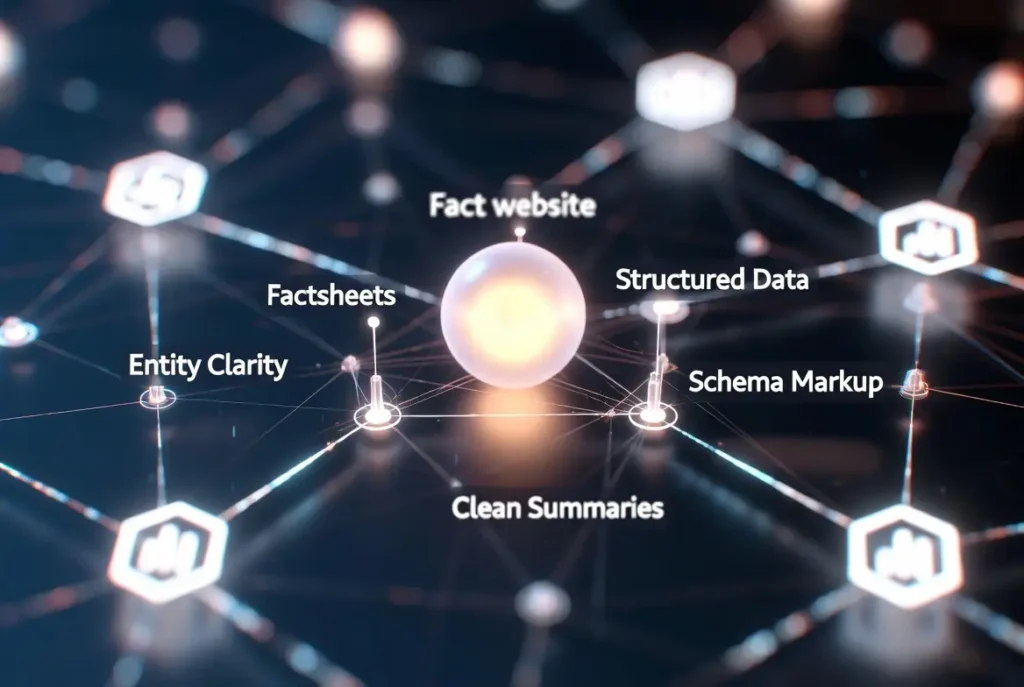
One tool that’s gaining attention for addressing this is the ERA AIVO Facts Sheet Generator WordPress Plugin, which helps bridge that gap.
What Does AI Visibility Really Mean?
At its heart, AI visibility is about ensuring that large language models (LLMs) can reliably:
- Understand your website’s purpose and expertise
- Accurately summarize your key information
- Position your brand as a credible source (not just a random link)
- Frequently mention or recommend your site in relevant responses
It’s different from traditional SEO, which focuses on keywords and backlinks. AI visibility leans more on:
- Well-implemented structured data (like schema markup)
- Clear, machine-readable factsheets
- Defined entities (e.g., your brand, products, or services)
- Concise summaries that LLMs can easily ingest
What Is AI Traffic Analytics?
This involves tracking how AI tools interact with your site, such as:
- How accurately they interpret and describe your content
- When they choose to recommend or cite your pages
- The types of user questions that lead to your site being referenced
- The associations AIs make between your brand and specific topics or keywords
A key challenge here is that much of this “traffic” (in the form of citations or recommendations) doesn’t always register as direct visits in tools like Google Analytics. That’s why many site owners turn to manual testing across different AI platforms to get a clearer picture.
How the ERA AIVO Facts Sheet Generator Boosts AI Visibility
The ERA AIVO plugin simplifies the process by automatically creating:
- Factsheets optimized for AI readability
- Entity-focused structured data
- Schema markup tailored to how modern LLMs work
- Clean, concise summaries designed for quick AI processing
The result? AI systems can more easily:
- Grasp your brand identity and offerings
- Verify and trust your information
- Pull accurate details to use in their responses
An important note: Many experts observe that AIs tend to favor clear, structured factual content over lengthy narrative articles because it’s easier to parse and synthesize reliably.
Why Structured, AI-Friendly Factsheets Often Outperform Traditional Human-Written Content
LLMs are trained to prioritize:
- Consistent, predictable formatting
- Explicit attributes and details
- Neutral, fact-based language
- Minimal extraneous details or storytelling
In contrast, purely human-written pieces can sometimes include:
- Subjective opinions or creative flair
- Varied or loose structure
- Elements that are harder for machines to extract cleanly
Tools like ERA AIVO produce “AI-native” content that’s purpose-built for:
- Feeding into LLM training and response generation
- Enabling precise answer extraction
- Aligning with Generative Engine Optimization (GEO) best practices
A Practical Step-by-Step Guide to Checking Your Site’s AI Visibility
Step 1: Query AIs Directly About Your Brand
Try searching your site or brand name in various tools, for example:
- In ChatGPT: “What is [yourwebsite.com] known for?”
- In Perplexity: “Best websites for [your niche]”
- In Claude: “List trusted sources about [topic]”
- In Gemini: “Explain [topic] and cite sources”
If your site rarely appears or is described inaccurately, it’s a sign that AI visibility could use improvement.
Step 2: Have AIs Generate Relevant Questions in Your Niche
Use a natural-sounding prompt like:
“Create a humanized list of common questions people ask about [your niche]. Make it natural.”
Run this across ChatGPT, Perplexity, Claude, and Gemini. You’ll often see varying patterns, which reveals opportunities for targeted content.
Step 3: Compare Responses Across Platforms
Build a quick comparison table to spot trends:
| AI Tool | Example Question | Is My Site Mentioned? | Notes |
|---|---|---|---|
| ChatGPT | Best tools for [topic] | No | No citation |
| Perplexity | Solutions for [issue] | Yes | Linked once |
| Claude | Explain [concept] | No | Generic response |
| Gemini | Overview of [niche] | No | Focused on bigger players |
This hands-on approach is a form of manual AI traffic analytics—and it’s surprisingly insightful.
Using Insights from ERA AIVO to Close Visibility Gaps
Once you’ve spotted patterns—like common questions AIs handle or misconceptions about your brand—you can feed that data into ERA AIVO to:
- Generate targeted factsheets answering those exact queries
- Add precise attributes and entities
- Auto-create optimized schema
- Strengthen overall trust signals
Many users report noticeable improvements in AI responses within a few weeks.
A Simple, Low-Tech Way to Gather AI Visibility Data
You don’t need fancy software to start. Just use:
- A Google Sheet for tracking
- 10–15 minutes daily querying AIs
- The ERA AIVO plugin for implementation
Log things like:
- Questions AIs commonly generate
- How they answer them
- If/when your site gets mentioned
- Specific pages or details referenced
Over time, clear patterns will emerge to guide your strategy.
Easy Analysis Questions for AI Traffic
Ask yourself these three regularly:
- Are AIs mentioning my brand at all?
- Do they describe my site accurately?
- Are competitors getting recommended instead?
- Incorrect descriptions → Refine factsheets for clarity
- No mentions → Bolster structured entities
- Competitors dominating → Study their formatting and schema
Modern Tools Supporting AI Traffic and Visibility Analysis
For testing and monitoring:
- ChatGPT (great for prompt-based checks)
- Perplexity.ai (strong on citations)
- Claude.ai (excellent summarization)
- Gemini (reflects Google-influenced behavior)
For structured data and optimization:
- ERA AIVO Facts Sheet Generator (central tool for factsheets and schema)
- Google’s Rich Results Test
- Various schema validators
Traditional tools that help indirectly:
- Google Search Console
- Bing Webmaster Tools (increasingly AI-aware)
Which Platforms Influence AI Visibility Most?
LLMs draw from major indexes like:
- Google and Bing crawls
- Public structured data sources
- High-authority sites with clear markup
Make sure your site is verified in:
- Google Search Console
- Bing Webmaster Tools
- Enhanced with robust schema (ideally via tools like AIVO)
- Supported by a clean sitemap and up-to-date factsheets
Tips to Encourage AIs to Recommend Your Site
To increase the chances of being suggested:
- Leverage ERA AIVO for automated factsheet creation
- Build entity-focused, structured content
- Directly address common AI-style questions
- Keep all facts current and accurate
- Steer clear of over-optimizing with keywords
- Prioritize clarity, structure, and factual precision
Remember: AIs don’t “rank” pages the same way—they select trustworthy sources to synthesize answers from.
Final Thoughts: The Shift from Pure SEO to AI-Ready Visibility
Looking ahead to 2026 and beyond:
- Traditional SEO will still drive direct traffic
- AI recommendations will build authority and indirect discovery
- GEO practices will help secure citations in generated answers
If your site isn’t optimized for AI comprehension, it risks fading from these influential responses over time. Tools like the ERA AIVO Facts Sheet Generator WordPress Plugin are becoming essential for staying visible—helping with everything from structured content creation to ongoing AI traffic insights and future-proofing your overall online presence.
Embracing this now can position your site strongly as search continues to evolve.