

📈 Customer acquisition costs are rising. Ad platforms are volatile. Margins are tighter.
If your WooCommerce store depends on one-time buyers, you are leaking profit.
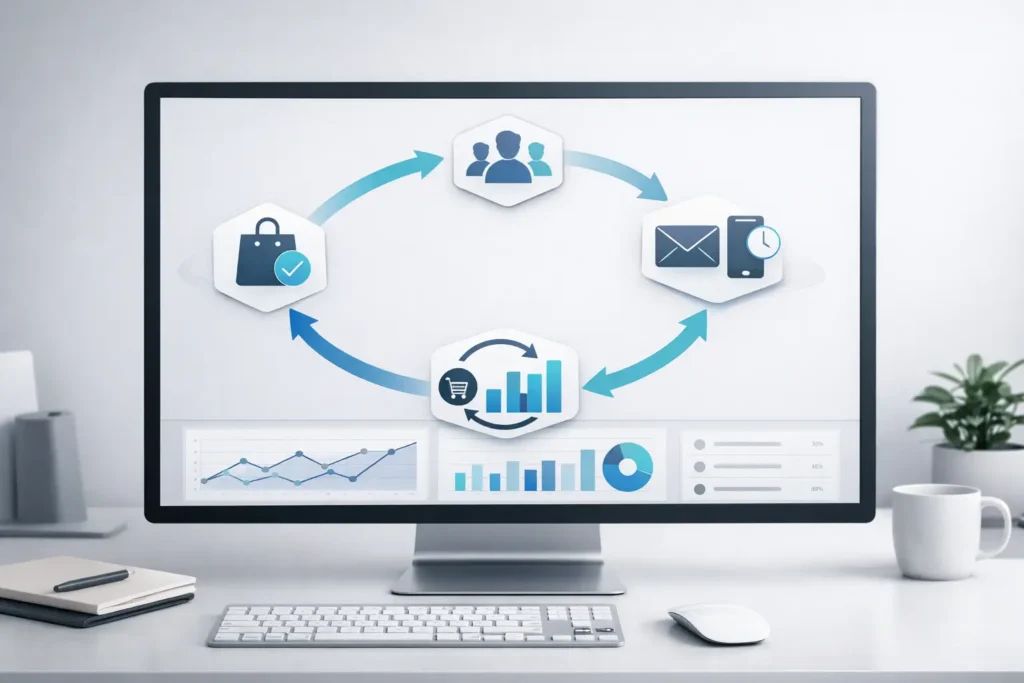
In 2026, ecommerce growth is no longer about “email marketing.” It’s about building Behavioral Post-Purchase Loops — automated, data-driven follow-up systems that turn every order into a review, a repeat purchase, a cross-sell opportunity, and a long-term customer.
This guide explains how to build a post-purchase automation workflow for WooCommerce that increases retention, boosts AOV, and improves Customer Lifetime Value (CLV) using multi-channel follow-ups (Email + WhatsApp + SMS).
Why Post-Purchase Automation Is Now a Revenue Engine (Not a Nice-to-Have)
Most stores stop communicating after the order confirmation. That creates post‑purchase dissonance, buyer’s remorse, missed upsell windows, low repeat purchase rate, and high CAC pressure.
A structured post-purchase nurture sequence does the opposite: reinforces trust, reduces churn, builds reciprocity, triggers social proof, and maximizes CLV.
The Ideal Post-Purchase Automation Workflow (2026 Standard)
Here is the proven behavioral loop:
Thank You
Delivery Confirmation
Review Request
Upsell/Cross-sell
Win-Back
1. Instant Thank You (0 Minutes After Order)
Channel: Email + Optional WhatsApp
Trigger: WooCommerce order completed
Tool: Make.com order completed trigger
Purpose: Reduce post‑purchase dissonance, confirm transaction, set delivery expectations, establish sender reputation. A fast confirmation improves inbox placement.
Subject: Thank you, {{customer_name}}!
Your order #{{order_id}} is confirmed.
We’ll update you when it ships.
Here’s what to expect next: …
2. Delivery Confirmation & Education (2–3 Days After Delivery)
Trigger logic: Use webhook to CRM → delay logic → delivery confirmation. Purpose: help customer use product, reduce support tickets, prevent returns, increase satisfaction.
3. Automated Review Request (7 Days After Delivery)
Optimal window. Filter by product category using routers in Make.com. Send dynamic review requests based on SKU. Push to Loox, Trustpilot, or video testimonial tools.
Hi {{first_name}}, enjoy your {{product_name}}? Share your experience!

⭐ Review here: {{review_link}}

We’d love to feature you. 4. Cross-Sell or Upsell (14–21 Days)
Dynamic upsell based on SKU, next‑sell automation. Example: If SKU = Protein Powder → Offer Shaker Bottle. Increases AOV, repeat purchase rate, CLV. Must feel like a concierge recommendation.
5. 60-Day Win-Back Loop
No purchase in 60 days → send value-first reminder: reminder of past purchase, personalized suggestion, loyalty incentive. Prevents churn before permanent.
Multi-Channel Customer Follow-Up (Email + WhatsApp + SMS)
In 2026, single‑channel automation is outdated. Use SMTP for transactional email, WhatsApp Business API for confirmations (90%+ open rates), Twilio for SMS nudges, push notifications for apps.
- WhatsApp: order confirmation, delivery alert, review reminder
- Email: educational content, upsell logic, loyalty messaging
- SMS: time‑sensitive reminders (sparingly)
Orchestration — not blasting.
How to Set This Up in WooCommerce (Technical Layer)
Step 1: Order Trigger
WooCommerce order completed trigger in Make.com. Event: order status changes to “Completed”.
Step 2: Router Logic
Filters based on product category, SKU, order value, customer tag. Enables VIP tagging, dynamic upsell routing, category‑specific flows.
Step 3: Delay Logic
Insert intelligent timing: Instant (Thank You), +7d (Review), +14d (Upsell), +60d (Win‑Back). Matches emotional stage of buyer journey.
Step 4: CRM + Revenue Tracking
Push purchase data to CRM, track revenue lift, retention rate, AOV, CLV, revenue per recipient. If you cannot measure, you are guessing.
How to Reduce Post-Purchase Dissonance with Automation
Psychological drivers: Reciprocity, Social Proof, Expectation Reinforcement. A simple thank‑you saying “Here’s what to expect next” reduces anxiety. Educational content decreases return rates and strengthens brand trust.
Advanced Retention Strategies for Scaling Stores
If you operate at $1M+ revenue:
- Zero-Party Data Collection: post‑purchase surveys (“What are you most interested in next?”)
- VIP Customer Tagging Automation: spend above threshold → VIP tag → early access, loyalty rewards
- Behavioral Product Category Loops: each category gets own automation (skincare: usage guide + refill reminder; fitness: training tips + accessory upsell)
Shopify vs WooCommerce Retention Automation
WooCommerce
flexible webhooks, lower long‑term SaaS costs
Shopify
higher monthly fees, less control
Using Make.com + CRM, WooCommerce stores build enterprise behavioral loops without enterprise pricing.
Frequently Asked Questions (Rich Snippet Optimized)
What is the ideal post-purchase email sequence?
Instant Thank You → 7-Day Review Request → 14–21 Day Upsell → 60-Day Win-Back.
Can I automate different follow-ups for different products?
Yes. Use routers in Make.com to filter by Product Category or SKU.
How long should I wait to send a review request?
7 days after delivery is optimal for most physical products.
How do I track the revenue lift from automated follow-ups?
Push order data to your CRM and track revenue per automation flow compared to baseline sales.
Does a Thank You email improve delivery rates?
Yes. Immediate transactional emails improve sender reputation and increase inbox placement for future campaigns.
The Strategic Shift: From Transaction to Relationship
If customers only buy once, your marketing is incomplete. Post‑purchase automation workflow for WooCommerce is not about sending emails. It is about increasing Customer Lifetime Value, lowering churn rate, reducing CAC pressure, improving operational efficiency, and turning buyers into brand advocates.
The stores that win in 2026 are not those spending more on ads. They are the ones building intelligent Behavioral Post-Purchase Loops.
Every order is not the end of a transaction — it is the start of a revenue sequence.
🔄 behavioral loops · multi‑channel · revenue engine